

Skip to content

FBG Accelerometers

Fiber Bragg grating accelerometers are advanced sensors that deliver accurate and high-resolution readings of slight structural vibrations. They employ the Fiber Bragg grating principle to detect any periodic variations in the refractive index of an optical fiber strand. Certain wavelengths are reflected as light moves through the fiber, and any vibrations or changes in acceleration modify this reflection. Consequently, FBG accelerometers identify any changes in acceleration and offer readings in different settings.

Specifications Overview

Fiber bragg grating (FBG) Accelerometer

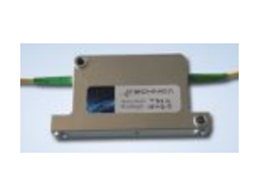
A3

A3 is a high-frequency and high-accuracy accelerometer. It provides measurements to 0 Hz without loss of sensitivity or phase flatness. Ready to install on 3 axes and can be cascaded. It can be used in marine, geotechnical, and civil engineering.
Fiber bragg grating (FBG) Accelerometer Sensor A4

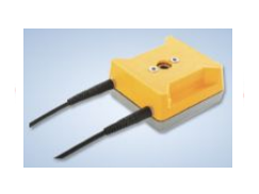
A4

A4 is a wide frequency range and high-shock proof accelerometer. It provides measurements to 0 Hz without loss of sensitivity or phase flatness. Ready to install on 3 axes and can be cascaded. It can be used in marine, geotechnical, and civil engineering.

Key Features

FBG accelerometers are often used in vibration monitoring programs due to their precision and reliability.

Highly sensitive and accurate

FBG accelerometers are perfect for structural monitoring purposes since they can precisely detect slight structural vibrations.

100% passive

These sensors don’t need power to function and can operate in hard-to-reach or dangerous areas where electricity isn’t accessible.

Low transverse sensitivity

FBG accelerometers reduce incorrect readings resulting from movements that occur outside the principal axis utilized for vibration monitoring.

Insensitivity to environmental noise

FBG accelerometers are not affected by environmental noise, which makes them perfect for delivering dependable measurements in environments where surrounding noise might undermine data accuracy.

Affordability

The setup and wiring for these acceleration sensor networks are significantly more affordable and easier to manage than similar electronic gauge networks.

Applications

Accelerometers are employed for monitoring the health of machinery to track the vibration and its temporal changes in shafts at the bearings of rotating devices like turbines, pumps, fans, rollers, compressors, or bearing defects, which, if neglected swiftly, can result in expensive repairs. Data from accelerometer vibrations enables users to oversee machines and identify faults before the complete failure of rotating equipment.

Infrastructure safety

FBG accelerometers are designed to safeguard essential infrastructure from harm or destruction by offering preventive security strategies through rigorous surveillance.

Monitoring the structural health of bridges

FBG accelerometers provide real-time remote surveillance systems for bridges to protect and sustain these structures.

Monitoring industrial and R&D processes

FBG accelerometers detect and mitigate risks to industrial and R&D processes instantly, ensuring sustained operational reliability over time.

FBG accelerometers are utilized in various industries, including automotive manufacturing, machine tool applications, pharmaceutical production, power generation and power plants, pulp and paper, sugar mills, food and beverage production, water and wastewater, hydropower, petrochemical, and steel manufacturing.