

FBG Pressure Sensors
Fiber Bragg grating pressure sensors may completely supersede traditional voltage sensors due to their small size, dispersed sensing, high safety, resistance to electromagnetic interference, and other inherent advantages. These sensors apply optical fiber technology to obtain accurate measurements of pressure changes. Their main operating principle is based on the fiber optic properties: when the sensor is impacted by various parameters, it detects any shifts in Bragg wavelength to indirectly monitor changes in physical or geometrical features. FBG pressure sensors are used to identify the level and relative pressure of gases and liquids in pipes and containers, as well as to control the flow in pipelines and tanks.
One of the biggest challenges that arise when working with FBG pressure sensors is to effectively distinguish strain, temperature variation, and obtain precise pressure measurements. In cases where temperature fluctuates, it may be hard to collect accurate data. Currently, there are two ways to resolve this matter, one of them involves building a sophisticated athermal coating, and the other – implementing a temperature compensation strategy.
Specifications Overview
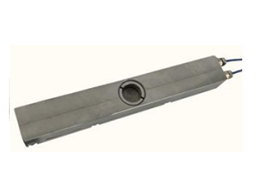
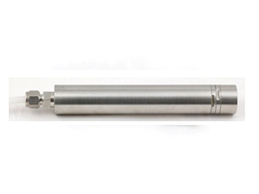
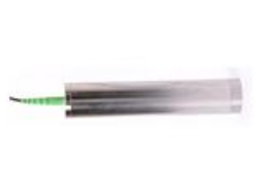
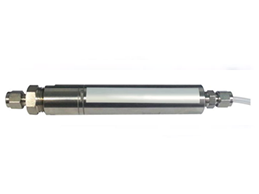
P1 | P3 | P4 | PT7 | |
Measurement range, MPa | 0 - 10 | 0 - 1 | 0 - 10 | 0 - 70 |
Operating temperature, °C | -50.. +80 | -20... +80 | -10... +50 | -40... +280 |
Temperature compensation | - | + | + | + |
Resolution, % | 0.2 | 0.1 | 0.1 | 0.1 |
Accuracy, % | +/- 0.5 | 1 | 0.5 | 1 |
Materials | Duralumin | Stainless steel | Stainless steel | Stainless steel |
Dimensions, mm | 227 x 23 x 30 | Ø26 x 135 | Ø34 x 210 | Ø26 x 170 |
P1
P3
P4
PT7
Key Features
FBG pressure sensors are exceptionally well suited for a wide range of applications, especially in harsh environments. Their outstanding characteristics make them reliable, accurate, and effective.
Accuracy and sensitivity
FBG pressure sensors demonstrate high accuracy and sensitivity. They detect slight changes in pressure offering exact data for critical applications.
Compact size
FBG pressure sensors are easy to integrate into existing systems and they don’t require any significant design changes. Thus, they are perfect for employment in cases where space is limited.
Fast response time
FBG sensors detect and broadcast any pressure changes almost instantaneously. Therefore, these sensors are ideal for any applications that require real-time monitoring and rapid feedback.
Diverse application scope
The diversity of FBG pressure sensors extends to a number of applications, including but not limited to civil engineering, aerospace, medical diagnostics, and more.
Applications
Fiber Bragg grating pressure sensors possess a unique capability to maintain stable performance under shock and vibration conditions.
FBG pressure sensors are most effective in the field of energy. They are useful in the oil and gas sector due to their extremely low cross-sensitivity between temperature and pressure.
Borehole monitoring
FBG pressure sensors offer crucial information for drilling operations and resource extraction by tracking pressure variations in boreholes and downhole environments.
Oil storage tank liquid level monitoring
Continuous monitoring is vital to ensure that tanks don’t exceed their maximum capacity and to avoid any leaks, or pressure drops that could lead to environmental hazards.
Pipeline monitoring
By monitoring temperature and pressure in reactors and pipes, FBG pressure sensors reduce the chance of leaks and ruptures while maintaining operating safety.
Fiber Bragg sensors are highly accurate and stable. They can measure high-speed events, are compact and portable, and are impervious to electromagnetic interference.

